
Chicken Coop Kits Compared: What's Actually Included
Chicken coop kits and hutch kits compared by what's actually in the box at each price tier, plus the hardware, paint and predator-proofing extras kits skip.
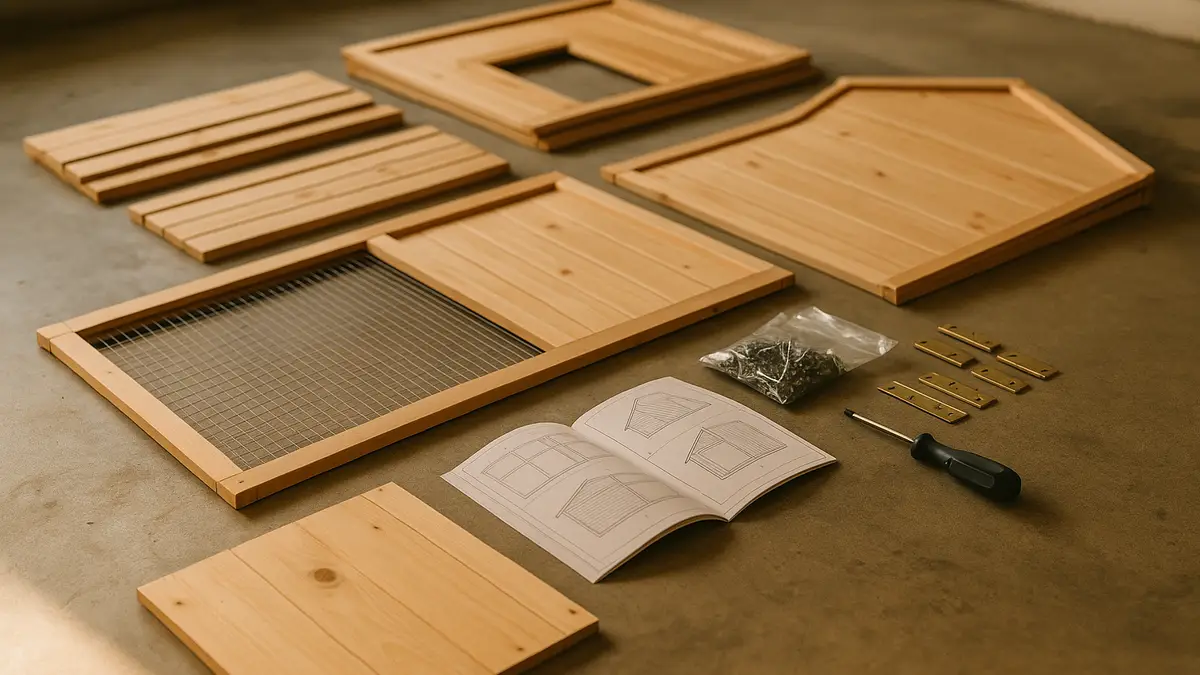
A “chicken coop kit” listing rarely tells you what’s actually in the box until after checkout. Lumber quality, hardware grade, and whether a run is even included vary enormously across the same price range. Here’s what each tier typically includes and what to budget on top.
What “kit” actually means here
A chicken coop kit is a pre-cut, pre-drilled coop package sold with an assembly manual, as opposed to raw lumber and a plan. “Chicken hutch kit” is generally the same product category at the small end, a raised coop box with an attached run, just under different marketing language. Both skip the same things regardless of name: predator-grade hardware cloth, exterior sealant, and bedding are add-on purchases in nearly every kit at every price point.
What’s included, by price tier
| Tier | Price | Typically included | Typically NOT included |
|---|---|---|---|
| Small kit | $150-350 | Pre-cut lumber, hinges, basic latch, wire mesh run panel | Paint/stain, upgraded hardware cloth, bedding, tools |
| Mid kit | $400-900 | Above plus larger run frame, better latches, sometimes a ramp | Paint/stain (sometimes primed only), predator-grade wire upgrade |
| Large/premium kit | $900-2,500+ | Above plus paint or stain, thicker-gauge run wire, multiple doors | Bedding, nest box liners, tool rental |
The gap that matters most: wire gauge
The single most common kit shortfall is the run’s wire mesh. Many kits, at every price tier, ship with lighter chicken wire or thin welded mesh rather than half-inch hardware cloth, which is the material that actually stops raccoons, weasels, and dogs from reaching through. Chicken wire keeps birds in; it does not reliably keep predators out. Budget $30-60 to swap or reinforce run panels with proper hardware cloth before the coop’s first night with birds in it. The full standard, plus the buried-footer detail kits never include, is in the predator-proofing guide.
Small kit ($150-350)
Matches the small coop category, 2-4 birds. These kits are the fastest to assemble, 2-4 hours typically, and the cheapest to ship since the parts count and lumber volume are both low. Latches are usually basic slide bolts, fine for casual predator pressure but worth upgrading to a carabiner or padlock-style latch if raccoons are active locally, they’re dexterous enough to work a simple slide bolt open.
Mid kit ($400-900)
Covers the walk-in-adjacent range, roughly 6-10 birds. This tier usually adds a larger, more structurally reinforced run frame and sometimes a ramp between coop and run, but paint or stain is inconsistent, some ship primed only, requiring a topcoat before the wood is actually weather-sealed. Check the listing specifically for “primed” versus “painted” language; it changes whether you need to buy and apply a finish coat before assembly is functionally done.
Large/premium kit ($900-2,500+)
Matches the large coop range, 10-20+ birds. At this tier, paint or stain is more often included, and wire gauge tends to step up to something closer to predator-grade by default, though it’s still worth confirming the exact hardware cloth spec rather than assuming. Multiple access doors are common here, useful for cleaning a large coop from both ends without climbing over birds and bedding.
Portable kits are priced differently
Chicken tractor and wheeled kits carry a premium over stationary kits of the same bird capacity because of the added wheel and frame hardware, generally $50-150 more at a given size tier. If pasture rotation isn’t the goal, a stationary kit at any of the tiers above gets more structure for the same money. The full portable-versus-stationary breakdown is in the portable coop guide.
Assembly time and tools to plan for
Beyond the kit price, plan the actual build day: small kits run 2-4 hours for one person with a basic drill and screwdriver bit set, mid kits run 4-8 hours and go faster with two people, and large kits regularly need a full day and two sets of hands for roof panels and run frame assembly. None of the tiers above typically include tools, a cordless drill and a basic level are worth having regardless of kit size.
Reading a kit listing before you buy
Listings rarely lead with what’s missing, so check three things before checkout regardless of price tier: the exact wire mesh spec (look for “hardware cloth” and a gauge or a fraction-inch measurement, not just “wire” or “mesh”), whether the wood is primed, painted, or bare (bare and primed both need a finish step you’ll have to do yourself), and whether the run is actually included or sold as a separate add-on, some listings show a coop-plus-run photo but ship only the coop box. Reviews are more reliable than the listing description for all three, since sellers describe features generously and reviewers tend to flag exactly these gaps.
The real total cost
Add $30-80 to any kit’s sticker price for hardware cloth upgrades, sealant or a finish coat, and bedding, and the effective price moves closer to $180-430 for small kits and $950-2,600 for large ones. That adjusted number is the one to compare against a fully custom or locally-built coop, not the bare listing price, since the extras aren’t optional if the coop needs to actually hold birds safely through a full season.
Hutch kits specifically
If a listing uses “hutch kit” rather than “coop kit,” expect the same small-flock size range and price band, but check more carefully whether a run is included at all; the hutch naming convention shows up more often on rabbit-hutch-style structures repurposed for chickens, which sometimes skip a proper attached run entirely and assume the buyer will free-range or build their own enclosure. That’s a fine setup for a flock with reliable daily free-range time, but it changes the effective cost since a separate run purchase or build adds back most of what a “kit” was supposed to save on labor and planning.
Frequently asked questions
Quick answers to what keepers ask us most
Do chicken coop kits come with everything needed?
No, almost never. Most kits include the structural lumber and basic hardware but skip paint or stain, upgraded predator-resistant hardware cloth, and bedding. Budget $30-80 extra for those regardless of kit price.
Is a chicken hutch kit the same as a coop kit?
Functionally yes for small flocks; 'hutch' is often used interchangeably with a small raised coop-and-run combo, usually in the same $150-350 price band as a small coop kit.
Are chicken coop kits worth it versus building from scratch?
For most first-time builders, yes. Kits save the design and cut-list work and typically cost close to raw lumber prices once you account for wasted cuts on a first build.
How long does it take to assemble a chicken coop kit?
Small kits (2-4 birds), 2-4 hours for one person. Mid-size kits, 4-8 hours, often better with two people. Large kits regularly need two people and a full day.