
Best Small Chicken Coops for 2-4 Backyard Hens
The best small chicken coops for 2-4 hens, tiered by price from $150 to $350, with the exact inside and run space each flock size actually needs.
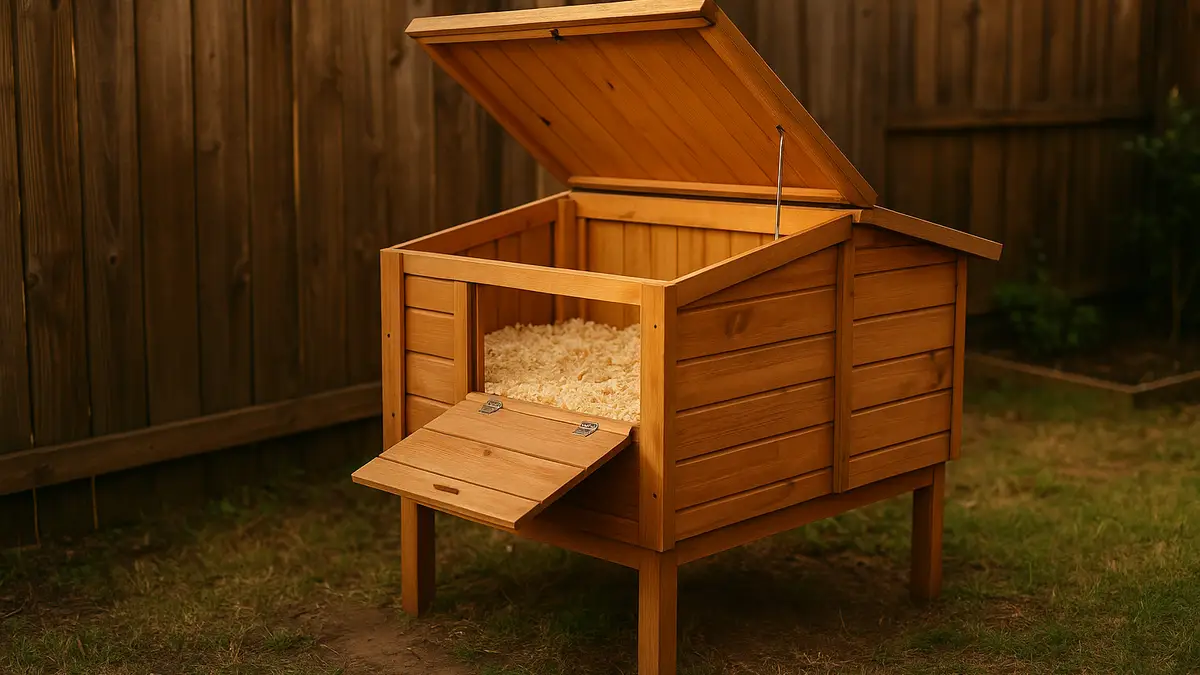
A flock of 2-4 hens is the most common starter size, and it’s also where coop shopping goes wrong most often: manufacturers list “up to 4 chickens” on coops that measure well under the 8 sq ft floor a flock actually needs. Here’s what to buy at each price point instead.
What 2-4 hens actually need
A small coop is a structure sized for 2-4 standard hens, needing 8-16 sq ft of inside space and 16-40 sq ft of run, using the standard 3-4 sq ft/bird inside and 8-10 sq ft/bird fenced-run formula. Because 2 birds at that ratio would math out to only 6-8 sq ft, the 8 sq ft floor overrides the formula, a coop smaller than that isn’t practical regardless of how it’s marketed. Run your exact flock size through the coop size calculator before you buy; it’s built for this exact question.
The ranking
| Tier | Price | What you get | Best for |
|---|---|---|---|
| Budget starter | $150-200 | Basic A-frame or box coop, 1-2 nest boxes, small attached run | 2 hens, mild climates |
| Mid-budget | $200-280 | Raised coop, hinged roof access, 2 nest boxes, predator-resistant latches | 3-4 hens, most climates |
| Upper small-flock | $280-350 | Larger footprint approaching walk-in-adjacent, 2-3 nest boxes, ventilation upgrades | 4 hens, cold-climate keepers |
Budget starter ($150-200)
These are compact A-frame or box-style coops, often with a run underneath and a coop box raised on legs above it. They fit 2 hens comfortably and 3 at the tight end of acceptable. Who this is NOT for: anyone in a climate with hard winters or heavy predator pressure. Budget coops typically skimp on ventilation and use thinner hardware cloth or plain wire mesh on the run, both worth upgrading immediately; swap any chicken-wire panels for half-inch hardware cloth before the first night.
Mid-budget ($200-280)
This tier is the sweet spot for most 3-4 hen flocks: raised coop body (keeps bedding dry and adds a shaded loafing spot underneath), a hinged roof or side panel for easy cleaning, and latches that need more than a raccoon’s dexterity to open. Nest box count is usually 2, which covers up to 7-8 laying hens under the 1-box-per-3-4-hens rule, so a 4-hen flock has margin. Who this is NOT for: keepers planning to grow past 4-5 birds within the year; better to size up now than replace the coop in 12 months. See the large coop guide if growth is likely.
Upper small-flock ($280-350)
These coops push toward the walk-in category without quite getting there, more inside square footage, sometimes a small human-access door, and better winter ventilation (ridge vents or adjustable window screens instead of fixed gaps). They handle 4 hens with real breathing room and tolerate a fifth bird added later without immediate crowding. Who this is NOT for: small-yard owners on a tight budget; the jump from mid-budget rarely buys enough extra function to justify $80-100 more unless winter hardiness is a real concern.
Kit vs. pre-built at this size
Small coops are the size range where flat-pack kits make the most sense: less lumber to assemble wrong, and shipping costs scale with size so small kits ship cheaper than large ones. Budget 2-4 hours of assembly time for most kits in this range. The coop kits comparison breaks down what’s actually included versus sold separately, hardware, paint, predator-proofing upgrades are common omissions worth checking before checkout.
Nest boxes and add-ons to check
A 2-4 hen small coop needs only 1 nest box under the ceil(hens ÷ 3.5) rule, but most kits ship with 2 anyway since a single box creates more egg-laying traffic jams than it saves in materials. Confirm the box is sized to your breed, 12x12x12in standard, smaller for bantams, since undersized boxes get used as roosts instead of nests. Full sizing and material comparison is in the nesting boxes guide.
Ventilation matters more than square footage at this size
Small coops fail on air quality before they fail on floor space, since a tight box with 2-4 birds concentrates ammonia from droppings faster than a larger structure with more air volume to dilute it. Look for cross-ventilation, openings on at least two sides, ideally covered with hardware cloth rather than sealed with solid panels, and check that vents sit above roost height so birds aren’t sitting in a direct draft overnight. Budget coops in the $150-200 tier are the most likely to skimp here, often a single small vent or gaps only at the roofline; adding a second vent opening is a cheap retrofit worth doing in the first week rather than waiting for a humid summer or a frozen winter condensation problem to force the issue.
Climate adjustments for a small flock
A 2-4 hen coop has less thermal mass than a larger one, which means it swings faster with outside temperature, hotter in summer, colder in winter, than a big walk-in with more air volume and more birds generating body heat. In hot climates, shade placement and extra ventilation matter more for a small coop than insulation ever will; in cold climates, a small flock of 2-3 birds may not generate enough collective body heat to keep the coop comfortably above freezing without added protection like deep bedding or a coop-safe heat source. Neither problem is solved by buying a bigger coop, it’s solved by placement (shade, wind-blocking) and bedding management, covered in the bedding guide.
Buying the right size the first time
Starting small and undersized is the single most common first-coop mistake; a flock of 3 nearly always becomes a flock of 5 within a year once the egg supply proves itself worthwhile. If there’s any chance of growing past 4-5 hens, price out the mid-size walk-in options in the large coop guide before committing, the cost difference is smaller than a second coop purchase.
Frequently asked questions
Quick answers to what keepers ask us most
How small can a chicken coop be for 2 chickens?
No smaller than 8 sq ft of inside space, even though 2 birds at 3-4 sq ft each would math out to 6-8 sq ft. Treat 8 sq ft as a hard floor; coops below it are cramped in practice regardless of the number on the box.
Is a small coop cheaper to run long-term?
Yes on feed and bedding, since fewer birds eat and mess less, but not by much on the coop itself. A well-built small coop and a mid-size one often cost within $100-150 of each other because materials and labor don't scale down linearly.
Can I add more chickens later to a small coop?
Only up to the coop's inside sq ft limit. Adding birds past that turns overcrowded fast; check the math in the coop size calculator before buying replacement stock.
Do small coops need a full run or can chickens free-range?
A small run is still worth building even with daily free-range time, since 4 sq ft/bird of loafing space (free-range) versus 8-10 sq ft/bird (fenced daily run) both beat leaving birds with no outdoor option during bad weather.