
Best Chicken Nesting Boxes and How Many You Need
Best chicken nesting boxes compared, basic wood, roll-away and multi-box units, plus the exact box count and size for your flock by the 1-per-3-4-hens rule.
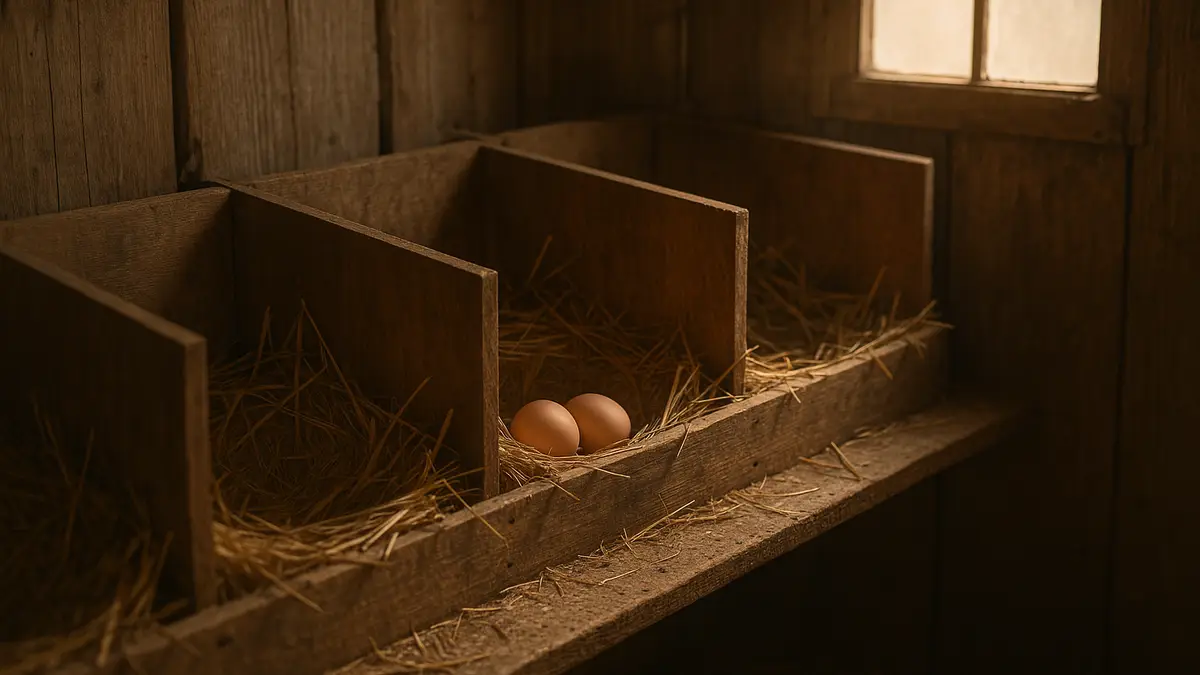
Nest box shortage shows up as floor-laid eggs, egg-eating, and hens fighting over a single popular box, all preventable with the right count and the right mounting height. Here’s what to buy and how many.
The box-count formula
A nesting box is a dedicated, enclosed laying spot separate from the roost, sized and counted using 1 box per 3-4 laying hens. The formula is boxes = ceil(laying hens ÷ 3.5), rounded up, with a minimum of 1 box regardless of flock size. A flock of 6-7 hens needs 2 boxes; 10-14 hens needs 3-4; 20 hens needs 6. Only laying hens count toward this number, not roosters, which is exactly why the coop size calculator tracks laying hens separately from total flock size, alongside the same inside-space and roost-length math covered in the coop size guide.
The ranking
| Type | Price | Best for | Downside |
|---|---|---|---|
| Basic wood box | $20-50 each | Budget builds, DIY coops | Eggs sit exposed until collected |
| Roll-away box | $80-200 per unit | Egg-eating or dirty-egg problems | Higher upfront cost |
| Multi-box furniture unit | $100-250 | Retrofitting an existing coop | Takes more floor or wall space |
Basic wood boxes ($20-50 each)
Simple enclosed cubbies, sized to breed and lined with bedding. Who this is NOT for: flocks with a history of egg-eating, a habit that starts when a hen breaks an egg by accident and discovers what’s inside; basic open boxes do nothing to prevent that once it starts. For flocks without that problem, basic boxes are the cheapest and simplest option and work fine for a full season with regular collection.
Roll-away boxes ($80-200 per unit)
These use a gently sloped floor so a laid egg rolls forward into a separate collection channel the hen can’t reach from inside the box, which solves both egg-eating and the cracked-and-dirty-egg problem from hens standing on their own clutch. Who this is NOT for: small 2-3 hen flocks on a tight budget, where the premium over basic boxes is hard to justify without an active egg-eating problem to solve.
Multi-box furniture units ($100-250)
Pre-built units with 3-6 boxes in one frame, designed to mount to a coop wall or sit as a standalone piece, useful when retrofitting an existing coop that was built without enough nest space. Who this is NOT for: anyone building a coop from scratch, where built-in boxes sized to the exact flock during construction are usually cheaper than a retrofit unit bought separately.
Sizing and mounting
Box interior size should match breed class: 12x12x12in for standard hens, 10x10x10in for bantams, 14x14x14in for giant breeds. Mount boxes 18-20in off the coop floor, always lower than the roost bars (18-36in), since chickens default to sleeping at the highest available point and will treat a nest box as a roost if it isn’t clearly the lower option, leaving droppings in what should be a clean laying spot.
Bedding depth inside the box
Line boxes with 3-4in of bedding minimum, straw, shavings, or hemp depending on preference, replaced or topped off regularly since compacted or soiled bedding is a top reason hens abandon a box for the floor instead. The full material comparison, hemp versus straw versus shavings, by absorbency and cost, is in the bedding guide.
Placement relative to feeders and the door
Position boxes away from the main feeder and waterer traffic path and ideally in the darkest, most enclosed corner of the coop; hens prefer privacy while laying, and a box positioned near constant foot traffic or bright light gets used less even if it’s otherwise correctly sized. If the coop is tight on space with feeders, waterers, and boxes all competing for wall room, especially likely in a small coop built for 2-4 birds, run the numbers through the coop size calculator before assuming a retrofit will fit.
Cleaning frequency and encouraging box use
Nest boxes need bedding checked more often than the rest of the coop floor, since a soiled box gets abandoned fast and a hen forced to lay on bare wood or wire is more likely to start laying on the coop floor instead. A quick daily check and a full bedding swap weekly, more often if a hen tracks in mud or the bedding gets wet, keeps boxes attractive enough to actually use. For a new coop or new hens not yet used to the boxes, a golf ball or fake ceramic egg placed in each box gives a visual cue that the spot is for laying, a low-cost trick that genuinely speeds up the transition for young pullets just coming into lay.
One popular box is a sizing problem, not a personality quirk
If hens consistently line up for one box and ignore the others, that’s usually a signal the “extra” boxes are poorly placed, too bright, too close to the door, or too high relative to the roost, not that the flock simply prefers one spot. Move the ignored boxes to darker, lower, quieter corners before assuming the count itself is wrong; the ceil(hens ÷ 3.5) formula holds up in nearly every flock once placement is fixed.
Retrofitting boxes into an existing coop
Adding nest boxes to a coop that was built without enough of them is common once a flock grows past its original plan. A wall-mounted multi-box unit is usually the fastest fix, screwed or braced to an interior wall at the correct 18-20in height, without requiring a full structural rebuild. Measure available wall space before ordering; a 3-box unit needs roughly 36-40in of linear wall space at standard box width, and mounting height still has to clear the coop floor by the same 18-20in regardless of how the boxes were added. If wall space is the real constraint, confirm the coop’s total footprint can support the addition using the coop size calculator before assuming a retrofit will physically fit alongside existing feeders and waterers.
Frequently asked questions
Quick answers to what keepers ask us most
How many nesting boxes do I need for 6 chickens?
2 boxes, using ceil(6 ÷ 3.5) = 2. The 1-box-per-3-4-hens rule rounds up, so anywhere from 5-7 hens also lands at 2 boxes.
What size should a chicken nesting box be?
12x12x12in for standard breeds, 10x10x10in for bantams, and 14x14x14in for giant breeds like Jersey Giants or Brahmas. Undersized boxes get used as roosts instead of nests; oversized boxes invite two hens to squeeze in and break eggs.
Should nesting boxes be higher or lower than the roost?
Lower. Boxes belong at 18-20in off the floor, below the roost bars at 18-36in, since chickens naturally want to sleep at the highest point available and will roost in nest boxes if they're not clearly the lower option.
Are roll-away nesting boxes worth the extra cost?
Yes if egg-eating or dirty eggs are a recurring problem. The sloped floor rolls eggs into a separate collection area birds can't reach, solving both issues at once for a real price premium over basic boxes.