
Best Chicken Waterers, Including Heated Winter Picks
Best chicken waterers by type, gravity fount, nipple system and heated, sized to flock size with the exact capacity ladder from chicks to adult flocks.
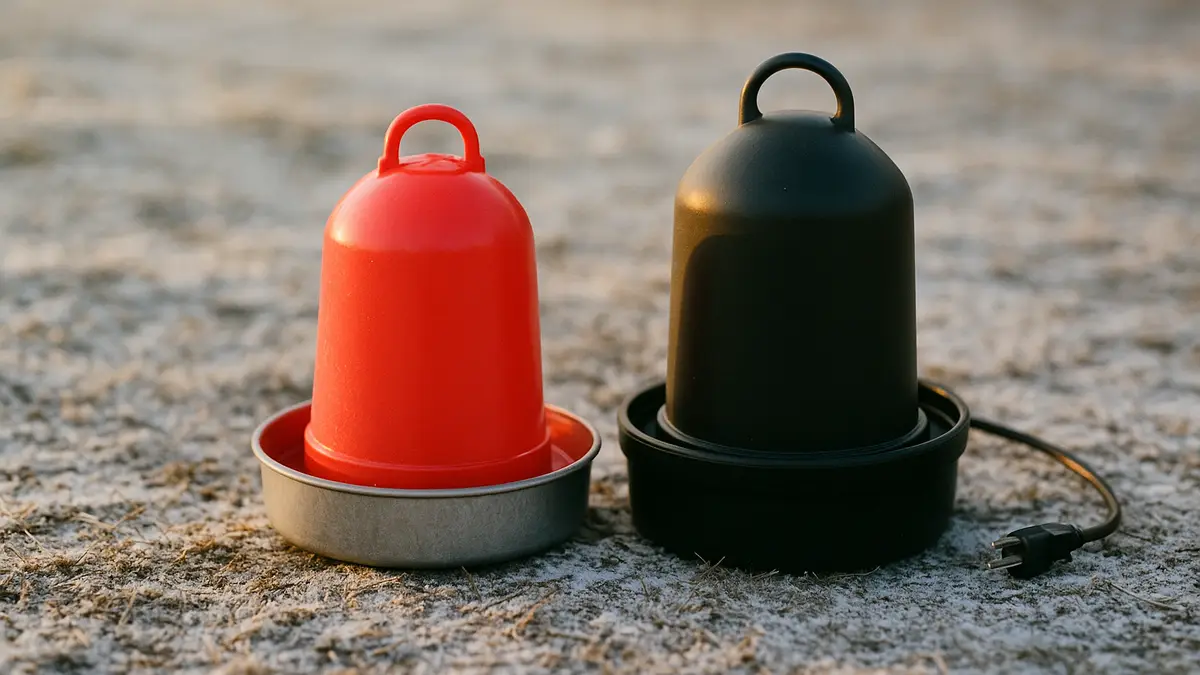
Water access fails more often from equipment mismatch than from actual shortage, an undersized unit running dry mid-day, or a standard waterer freezing solid overnight. Here’s what type and capacity actually fits a backyard flock.
The three waterer types
A gravity fount waterer is a two-piece unit, a base tray and an inverted reservoir, that refills the tray by gravity as birds drink from it, the standard entry point for most flocks. Nipple or cup systems route water through small valves birds peck to release, keeping the water enclosed and far cleaner than an open tray, at the cost of a short training period for birds used to open water. Heated waterers add a thermostatically controlled base or built-in element that keeps water liquid through freezing temperatures, essential equipment rather than a luxury anywhere winters go below 32degF.
The ranking
| Type | Price | Best for | Downside |
|---|---|---|---|
| Gravity fount | $10-30 | Most flocks, simple setup | Open tray gets dirty, no freeze protection |
| Nipple/cup system | $20-60 | Cleaner water, less mess | Learning curve, needs freeze protection separately |
| Heated | $40-90 | Any winter below freezing | Needs a power source near the coop |
Gravity founts ($10-30)
The standard, reliable choice: fill the reservoir, invert it onto the base, and the tray stays topped off as birds drink. Who this is NOT for: keepers dealing with frequent tray contamination from bedding and droppings, since an open tray at bird height collects both; a raised stand or a switch to a nipple system solves this more directly than just cleaning the tray more often.
Nipple/cup systems ($20-60)
These route water through a sealed line to small nipple valves or cups, which birds learn to peck within a few days. Water stays cleaner since nothing sits open to bedding or droppings, and evaporation and spillage both drop. Who this is NOT for: flocks in freezing climates without a heated add-on, since the narrow valve lines freeze faster than a wide-tray gravity fount and are harder to thaw quickly.
Heated waterers ($40-90)
Below 32degF, standard plastic waterers freeze solid, cutting off water access entirely until someone breaks the ice or swaps in a fresh one, a chore that gets old fast and a real welfare risk if missed for a day. A heated base or built-in element solves this by keeping water liquid through the coldest mornings. Who this is NOT for: warm-climate keepers who never see a hard freeze; the added cost and power requirement buy nothing there. Needs a nearby power source and outdoor-rated cord, worth planning coop electrical access around before winter, not during the first freeze.
Sizing to flock and life stage
Waterer capacity should track the same ladder as feed:
- Chick stage (0-6 weeks): roughly a 1-quart unit per 6-8 chicks, shallow enough that chicks can’t fall in.
- Grow-out (6-20 weeks): a 3-5 quart unit covers 10-15 birds.
- Adult flock: a 1-gallon (4 quart) waterer covers 8-10 birds; a 3-5 gallon galvanized unit covers 15-20 birds with less frequent refilling.
Chick-stage waterers specifically need enough of a lip or marbles/pebbles in the base tray to prevent drowning, a detail worth checking in the brooder setup guide before a chick shipment arrives.
Placement inside the coop and run
Waterers do best off the ground, on a brick, stand, or hanging bracket, both to keep bedding out of the water and to keep it below roost height so droppings don’t fall directly in. Keep it clear of the nest boxes too; a waterer positioned too close to a box is the most common cause of soaked bedding and abandoned boxes. Where the waterer physically fits depends on how much floor space the coop and run actually have; check that against your flock’s footprint using the coop size calculator, built on the same per-bird numbers laid out in the coop size guide, if space is already tight with feeders and nest boxes accounted for.
Summer heat and algae
Heat brings its own waterer problem: algae growth in a tray sitting in direct sun, and higher water turnover as birds drink more to cope with the temperature. Position waterers in shade if at all possible, both to slow algae growth and to keep water from getting hot enough that birds avoid drinking it, dehydration risk climbs fast in a heat wave if water access effectively drops because the water itself is unappealing. A few drops of apple cider vinegar in the water is a common home remedy some keepers use against algae buildup, though regular rinsing and a shaded location do more of the actual work. Nipple and cup systems have an edge here too, since the enclosed line blocks direct sun exposure to standing water far better than an open gravity tray.
Matching waterer to feeder capacity
Buy waterer and feeder capacity together rather than separately; a 1-gallon waterer paired with a 5-gallon feeder means one gets refilled twice as often as the other for no good reason. The full feeder type and capacity comparison, gravity, treadle, and auto-door, is in best chicken feeders, sized to the same flock-count numbers used here.
Number of waterers per flock
A single correctly-sized waterer works fine for flocks under about 10-12 birds, but larger flocks benefit from two stations rather than one bigger unit, the same logic that applies to feeders. Splitting water access cuts crowding at one spot and gives lower-ranking birds somewhere to drink without waiting out a more dominant bird first. It also builds in redundancy: a frozen or jammed unit doesn’t cut off the whole flock’s water supply if a second station is already up and running elsewhere in the coop or run.
Frequently asked questions
Quick answers to what keepers ask us most
Do I need a heated chicken waterer?
If temperatures regularly drop below freezing, yes. Standard plastic waterers freeze solid below 32degF, cutting off water access, which is a faster welfare problem than most keepers expect in a hard freeze.
How much water do 10 chickens need per day?
Roughly 1-1.5 gallons total for 10 adult standard hens on a normal day, more in summer heat. A 1-gallon feeder-style waterer covering 8-10 birds needs daily refilling; a 3-5 gallon galvanized unit stretches that out.
Are nipple waterers better than gravity founts?
Nipple and cup systems stay cleaner since birds drink without standing in or contaminating an open tray, but they need a slight learning curve for a flock switching from gravity founts and won't work in freezing temps without a heated base.
Can chicks and adult chickens share a waterer?
Not the same unit at the same time. Chicks need a shallow, chick-safe fount sized around a 1-quart unit per 6-8 chicks; adult-depth waterers risk drowning very young chicks.